

Discover how we developed an AI-powered barbell tracking app that revolutionizes velocity-based training with zero additional hardware requirements.
AI Manufacturing Software Development Services
Space-O AI is an AI development company for manufacturing, building custom software for discrete manufacturers, process plants, industrial enterprises, and manufacturing technology companies. Every system is built from scratch around your production environment, data infrastructure, and workflows – nothing pre-packaged.
We develop AI manufacturing solutions across the full production lifecycle: predictive maintenance, computer vision QC, AI-native MES, supply chain intelligence, autonomous scheduling, and IIoT connectivity. Each engagement starts with workflow discovery and architecture mapping against your actual plant data.
Our manufacturing software developers have delivered 500+ AI projects in automotive, pharmaceutical, food and beverage, and electronics manufacturing – on plant floors where data lives in PLCs and SCADA historians and every hour of unplanned downtime has a measurable cost.


Let’s Discuss Your Idea
Our Valuable Clients


AI Projects We’ve Developed
-
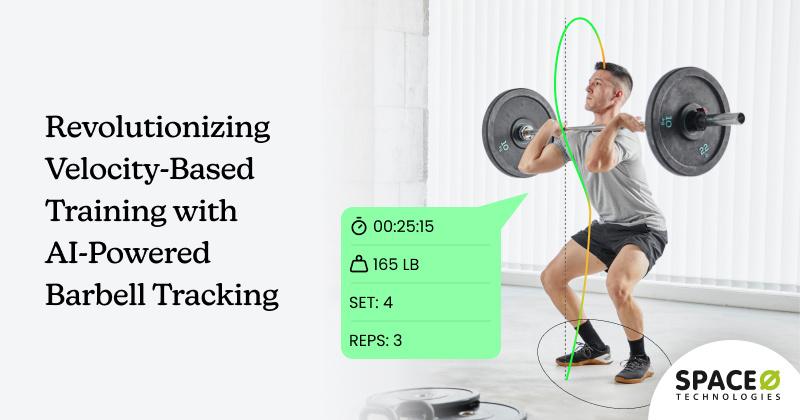
Revolutionizing Velocity-Based Training with AI-Powered Barbell Tracking
-
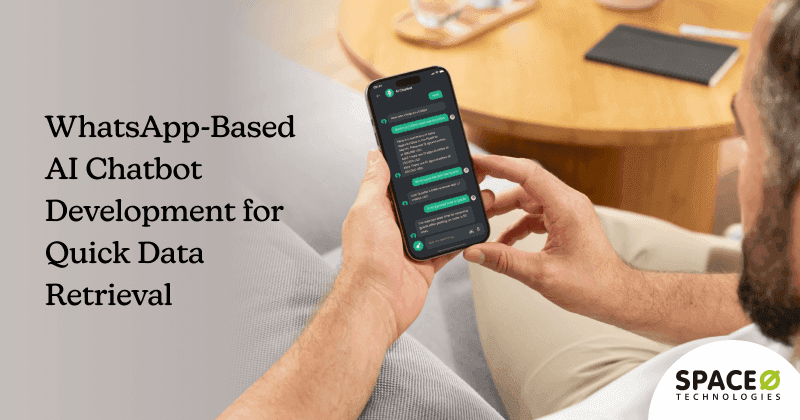
WhatsApp-Based AI Chatbot Development for Quick Data Retrieval
Discover how a roofing company streamlined customer interactions with a WhatsApp-based AI chatbot. Learn how quick data retrieval improved efficiency and satisfaction
-
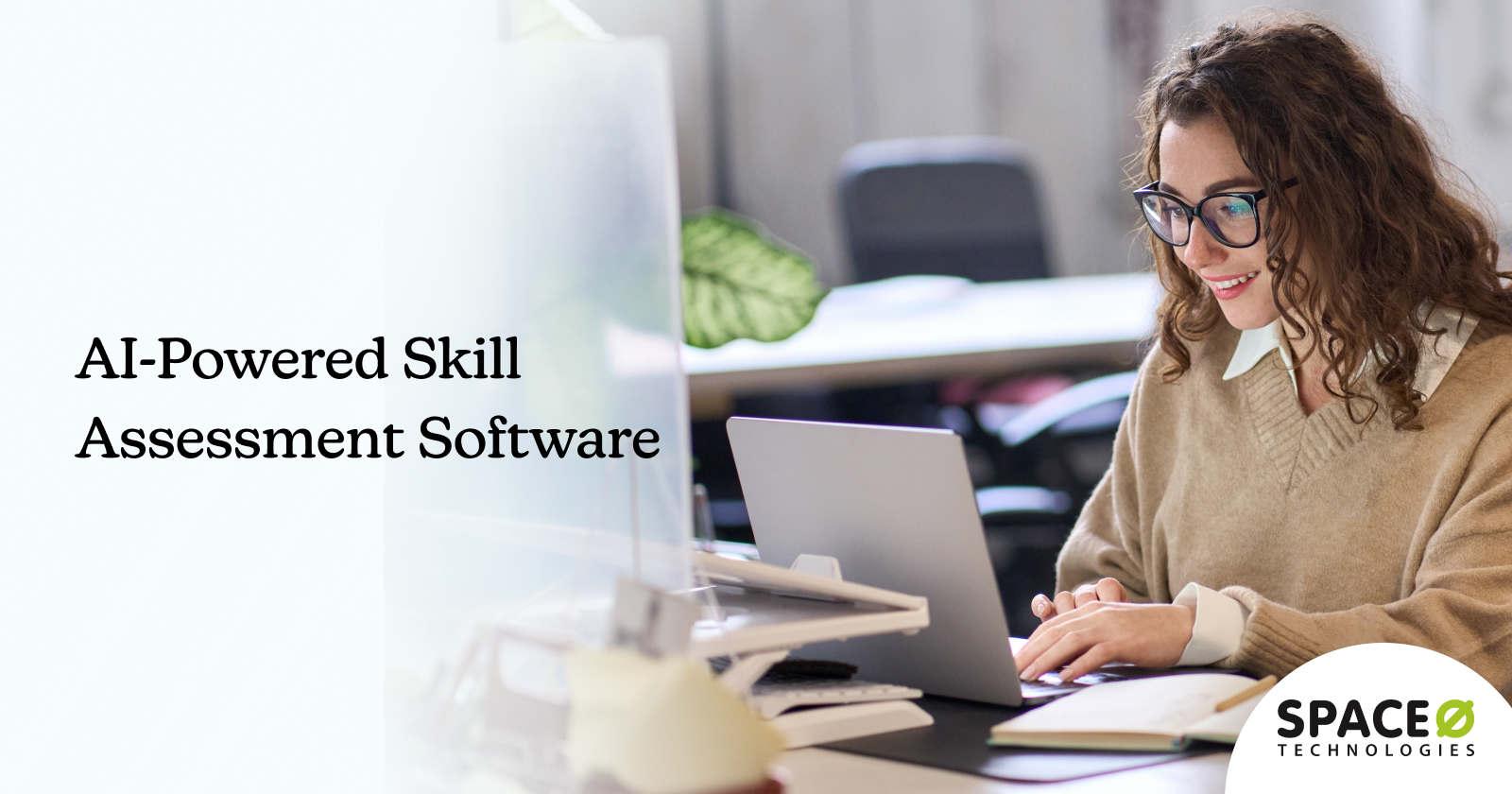
How We Built an AI-Powered Skill Assessment Software for Edtech Business
Discover how Space-O Technologies built skill assessment software for an established EdTech business using React.js, Node.js, and OpenAI.
AI Manufacturing Solutions We Build
From machine learning in manufacturing to generative AI and autonomous agents — here are the AI manufacturing software solutions and software development for manufacturing use cases we handle for factories, plants, and industrial enterprises.
Predictive Maintenance
We build ML models trained on vibration, temperature, acoustic, and load signatures to detect asset degradation before failure. IIoT sensors feed the model continuously, CMMS work orders generate at the right time, and assets get serviced when data says they need it — not a calendar.
Computer Vision Quality Inspection
We build deep learning inspection systems that analyze every unit using high-resolution cameras and defect models trained on your product’s failure taxonomy. Non-conforming parts are rejected before the next station, and every rejection logs automatically against the work order in your MES and QMS.
AI-Native Manufacturing Execution System (MES)
We build MES platforms where an AI layer reads production data in real time, identifies bottlenecks before they halt lines, and surfaces corrective actions in time to act. Work orders, cycle times, and deviations feed production intelligence continuously — not stored as passive records.
Demand Forecasting and Supply Chain Intelligence
We build forecasting models trained on your sales history, promotional calendars, supplier lead times, and market signals to generate SKU-level demand plans. Reorder signals push to your ERP as inventory drifts below dynamic safety stock thresholds — before shortages reach the production schedule.
Autonomous Production Scheduling
We build scheduling AI that monitors machine availability, labor, material supply, and open orders continuously, detecting conflicts before they create idle capacity or missed deliveries. When constraints change, the system generates a revised schedule for planner approval — removing the manual rebuild every disruption requires.
Digital Twin and Process Simulation
We build digital twins that model your line throughput, machine behavior, capacity constraints, and material flow using actual production data. Engineers test configuration changes, run capacity scenarios, and validate new product introductions in the simulation before anything changes on the floor.
IIoT and Plant Floor Connectivity
We build connectivity layers that link your PLCs, SCADA systems, and plant floor sensors to operational software through OPC-UA, MQTT, and Modbus. AI runs on top of that unified data environment to monitor equipment health, detect process deviations, and trigger automated responses without supervisor intervention.
OEE Monitoring and Loss Analysis
We build AI OEE platforms that compute availability, performance, and quality at the machine, cell, line, and facility level in real time, then identify which loss categories drive deviation from target. Top contributors surface as they develop — not in the next engineering review.
AI-Enhanced ERP Analytics
We build an AI analytics layer on top of your existing SAP, Oracle, Dynamics, or Epicor platform that reads production, inventory, and financial data in real time and surfaces anomalies as they develop. No platform replacement required — the AI connects through standard APIs.
Client Testimonials

Project Summary
AI Development
AI System Development for Christian Church
Space-O Technologies developed a private AI system for a Christian church. The team built a system capable of uploading research information, allowing other church workers to query information in a natural way.
View All →
Project Summary
Retail
AI System Development for Gift Search Company
Space-O Technologies has developed an AI system for a gift search company. The team has built a recommendation engine, implemented dynamic pricing, and created tools for personalized marketing campaigns.
View All →
Project Summary
Nonprofit
AI System Development for Christian Church
Space-O Technologies developed a private AI system for a Christian church. The team built a system capable of uploading research information, allowing other church workers to query information in a natural way.
View All →
Project Summary
Consulting
POC Design & Dev for AI Technology Company
Space-O Technologies developed the POC of an AI product for life coaching conversations. Their work included wireframing, app design, engineering, and branding.
View All →
Project Summary
Software
Custom Mobile App Dev & Design for Software Company
Space-O Technologies was hired by a software firm to build a photo editing app that caters to restaurant owners. The team handled the development and design work, including the addition of AI-driven features.
View All →Generative AI for Manufacturing
Plant floor documentation consumes hours of supervisor, technician, and quality engineer time every shift. Shift reports, maintenance work orders, and non-conformance records are exactly the workflows where generative AI delivers immediate time recovery — the data already exists in your MES, CMMS, and QMS, and the output is structured text a human reviews before it is acted on.
Shift Report and Production Handoff Generation
Since 2010, we’ve solved complex manufacturing challenges like reducing defect rates through computer vision and cutting downtime with predictive algorithms. Our engineers hold specialized AI certifications and understand manufacturing workflows, not just generic software development.
Maintenance Work Order Drafting
We build generative AI that reads fault codes, sensor alerts, and CMMS history at fault resolution, then drafts the work order with fault description, probable cause, corrective action, parts consumed, and follow-up requirements. Technicians review and close — keeping asset histories complete for predictive models.
NCR and CAPA Documentation
We build generative AI that aggregates non-conformance data from your QMS, production records from your MES, and material traceability from your ERP, then drafts the Non-Conformance Report (NCR) and an initial Corrective and Preventive Action (CAPA) based on similar past events. Quality engineers start from a draft — not a blank document.
Agentic AI Solutions We Build for Manufacturers
In manufacturing, the highest-cost coordination problems are multi-step: rescheduling production when a machine goes down requires checking open orders, finding alternative capacity, communicating changes, and updating the ERP across multiple systems simultaneously. Agentic AI handles that sequence autonomously, with human approval at the decision point — not at every individual step.
Production Rescheduling Agents
We build agents that monitor scheduling inputs continuously, detect conflicts before they create missed orders or idle capacity, and generate revised proposals for planner approval. When a machine goes down, the agent finds alternative routings and produces a revised plan — the scheduler approves, not rebuilds.
Supply Chain Disruption Response Agents
We build agents that monitor your supplier network for delay signals from portals and inbound logistics, identify which production orders are at risk, surface alternative sourcing from your approved vendor list, and trigger a procurement response workflow before the disruption reaches the production schedule.
Quality Escalation and CAPA Agents
We build agents that monitor your QMS and production data for threshold breaches, trigger the escalation workflow at detection, assign investigation tasks to the appropriate quality team members, and initiate production holds in your MES — containing affected product before more is built.
Conversational AI Solutions We Build for Manufacturers
SCADA (Supervisory Control and Data Acquisition) and MES (Manufacturing Execution System)-connected conversational AI for plant floor and back-office operations — handling operator queries, technician diagnostics, and procurement questions without routing every interaction through a supervisor or coordinator.
Plant Floor Operator Assistants
We build conversational AI deployed on tablets or fixed terminals at the station that responds to operator queries about work instructions, quality acceptance criteria, machine setup parameters, and engineering changes by pulling live data from your MES. Operators get current information without leaving the line.
Maintenance Technician Voice AI
We build hands-free voice AI for maintenance technicians that responds to spoken queries about fault codes, repair procedures, parts specifications, and inventory availability by reading from your CMMS and ERP. Technicians speak a query and receive an audio response — both hands stay on the work.
Procurement and ERP Query Bots
We build conversational AI connected to your ERP that answers procurement and inventory questions through Teams, Slack, or a web interface – inventory positions, open purchase order status, supplier lead times, and component availability against the production schedule — in plain language, without navigating the ERP.
Operations Intelligence AI for Manufacturers
Manufacturing operations teams face OEE targets they cannot reliably hit, scrap rates that resist manual investigation, and compliance reporting cycles that consume quality engineering time. These are the workflows where a custom manufacturing AI solutions platform delivers the most direct cost reduction.
Scrap and Yield Optimization
We build AI models that analyze your production dataset across machine parameters, material lots, and operating conditions to identify combinations correlated with yield loss. The system surfaces parameter adjustments for process engineers — in closed-loop configurations, it adjusts parameters automatically within defined ranges to hold yield.
Compliance Documentation Automation
We build AI pipelines that aggregate production records, inspection data, and process logs your MES and QMS already contain, then generate compliance documentation for ISO 9001, IATF 16949, FDA 21 CFR Part 11, or your sector-specific standard automatically. Quality engineers review a draft — not source records.
Production Cost and Variance Analytics
We build analytics platforms that connect production data, material costs, labor records, and quality outcomes to identify cost drivers behind margin variance at the order, product, and line level. Operations and finance teams see the manufacturing cost picture in real time — not in period-close reports.
AI Manufacturing Solutions by Industry Vertical
Manufacturing AI requirements differ by vertical. Food and beverage, pharmaceutical, steel, chemical, and drug manufacturing each run on different data environments, compliance frameworks, and production constraints. Here is how we approach AI development in the verticals we work in most frequently.
Food and Beverage Manufacturing
We build computer vision systems that inspect every unit for contamination, dimensional non-conformance, and color or texture deviation on high-speed production lines. AI scheduling accounts for shelf life constraints, changeover sequences, and raw material variability — complexity standard MES scheduling logic handles poorly at production speed.
Pharmaceutical Manufacturing
We build AI that automates batch record generation from process data your historian already captures, monitors critical process parameters against validated limits in real time, and flags deviations for quality review before batch release. Full audit trail, electronic signature, and 21 CFR Part 11 compliance built into every system.
Drug Manufacturing
We build documentation AI and process monitoring systems that connect equipment qualification data, in-process controls, and stability study inputs to GMP-compliant records. Deviation detection runs continuously against your validated process parameters — quality engineers review flagged events, not source data from multiple systems.
Steel and Metals Manufacturing
We build surface defect detection systems trained on your specific failure modes in coils, slabs, plates, and billets. Process parameter AI identifies the temperature profiles, rolling speeds, and cooling rates correlated with yield loss or dimensional non-conformance and feeds adjustment recommendations to operators or runs in closed-loop within defined ranges.
Chemical and Process Manufacturing
We build process monitoring AI that tracks reactor conditions, feedstock variability, and temperature profiles against validated operating envelopes to detect batch deviations before they produce yield loss or trigger safety events. SOP deviation alerts and runaway condition indicators are configured to the process safety thresholds your engineering team defines.
Electronics Manufacturing
We build AI inspection systems for PCB assembly that detect solder defects, component misplacement, and polarity errors at line speed using trained vision models. Yield optimization AI correlates SMT process parameters with defect rates to identify the equipment conditions and material combinations driving scrap before they affect the next production run.
Engagement Models for Manufacturing Software Development
Every manufacturing business has unique goals and budget constraints. Our flexible engagement models are designed to align with your project complexity, timeline, and level of control — ensuring faster delivery and predictable outcomes.

Time & Materials Model
Flexible engagement with transparent hourly billing and an adjustable scope. Ideal for evolving projects, iterative development, or proof-of-concept builds.
- Best For: Exploratory projects, phased implementations, R&D, evolving manufacturing requirements
- Rates: Based on specialist expertise and tech stack
- Billing: Weekly or monthly with detailed time reports
- Flexibility: Adjust team size, change priorities, or scale as needed
Recommended

Fixed Price Projects
Get end-to-end manufacturing software with a clearly defined scope, timeline, and budget. Ideal for projects where requirements are well-established and predictability is key.
- Best For: ERP or MES implementations, system integrations, production planning systems
- Timeline: 3–8 months (based on scope & complexity)
- Payment: Milestone-based | 20–30% upfront
- Deliverables: Complete solution with documentation, testing, deployment support & training

Dedicated Development Team
Get a full-time team of AI and software experts working exclusively on your manufacturing solution. Perfect for complex, long-term initiatives needing consistency and deep domain expertise.
- Best For: Long-term manufacturing software development, enterprise systems, extended AI capabilities
- Timeline: 3–24 months (extendable)
- Team Size: 2–12 specialists including developers, AI engineers, QA & PMs
- Management: Direct control with daily standups & weekly sprint reviews
Why Choose Space-O as Your AI Solutions for Manufacturing Partner
Most manufacturing AI projects fail between proof of concept and production. These are the capabilities that determine whether AI reaches the plant floor — and stays running.
AI Runs the System, Not a Dashboard
We build manufacturing software where AI is the decision-making layer — not a reporting add-on. Predictive models, computer vision pipelines, scheduling agents, and documentation AI are built for industrial environments where real-time response and production continuity are non-negotiable.
OT/IT Integration Is Core, Not Optional
Manufacturing AI that cannot reach PLCs, SCADA historians, and existing MES does not reach production. We have direct integration experience with OPC-UA, Modbus, and Profinet protocols alongside SAP, Oracle, Dynamics, and Epicor — handling the OT/IT layer most vendors skip entirely.
Edge and On-Premises Deployments
Plant floor environments cannot always depend on cloud connectivity for real-time inference. We build AI that runs at the edge, on-premises, or in hybrid configurations based on your connectivity requirements, latency constraints, and data sovereignty needs.
ISO-Aligned Engineering Process
Every project delivers version-controlled code, test coverage, change management documentation, and handoff materials your team can maintain without depending on us. You own what we build and can extend it independently.
Technology Stack We Use to Build AI Manufacturing Software
We select technology based on the manufacturing use case, data environment, and OT/IT integration requirements. For deployments requiring full on-premises data control or edge inference at the machine level, we work with models that run locally without cloud dependency.
Frameworks and Libraries
IIoT and Edge
LLMs and Agents
ERP Integration
Cloud
MES and CMMS
Databases
Frequently Asked Questions About Manufacturing AI Solutions
How do your AI manufacturing solutions integrate with existing ERP and MES without disrupting production?
Integration with existing ERP and MES is how most of our manufacturing AI projects are structured. We connect through standard APIs, OPC-UA, and data integration layers rather than replacing the systems your operations teams already use. For SAP, Oracle, Dynamics, and most major MES platforms, we have established integration patterns that allow the AI layer to go live without production disruption.
How long does it take to deploy a predictive maintenance or computer vision QC system?
A focused computer vision quality inspection system for a single product line typically takes 8 to 16 weeks from discovery to production deployment. A predictive maintenance system covering multiple asset classes with sensor integration typically runs 12 to 20 weeks. More complex deployments involving ERP integration, multiple production lines, and custom model training run 20 to 36 weeks. We deliver in phases so working software is visible at each milestone.
Can you build AI for our plant floor without disrupting current production?
Yes. We deploy AI systems in parallel with existing production workflows during validation — the AI runs alongside your current process rather than replacing it until validated to your accuracy and reliability standards. For computer vision we inspect without interrupting the line. For predictive maintenance, models run in monitoring mode before triggering work orders.
How much does custom manufacturing AI software development cost?
Project costs typically range from $60,000 USD for a focused AI module to $500,000 or more for a full platform build covering multiple production systems, ERP integration, and custom model development. Time and materials engagements start at $25 USD per hour. The most accurate scope estimate comes from a discovery call where we map your requirements, data environment, and integration constraints.
Can you start with a proof of concept before committing to a full build?
Yes. Most of our manufacturing AI projects start with a time-and-materials proof of concept that validates the technical approach and production fit before a full commitment. A POC typically runs 4 to 8 weeks and covers core AI functionality, connectivity with your data environment, and a working demonstration with your operations team.
How do I hire AI experts for automation in manufacturing?
Most companies that hire AI experts for automation in manufacturing need a partner with both AI engineering capability and direct OT/IT experience — the plant floor context that separates production-ready automation from a generic development team. Space-O brings manufacturing AI specialists with hands-on experience in PLCs, SCADA, MES, and ERP integration. Engagements start with a scoping call to assess your requirements and data environment.
What makes manufacturing AI development harder than AI in other industries?
Three things separate manufacturing AI from most other domains. First, data access: manufacturing data lives in PLCs, SCADA historians, MES platforms, and ERP systems that require OT/IT integration expertise to reach, and data quality in production environments is inconsistent in ways generic AI frameworks are not designed for.
Second, real-time requirements: plant floor applications need inference in milliseconds, which drives every architecture decision from model selection to edge versus cloud deployment. Third, error consequences: AI errors in high-throughput production environments have immediate operational consequences, requiring confidence scoring, human oversight thresholds, and audit trails that most AI systems outside manufacturing do not need.
Insights & Innovations of AI and ML Development
-
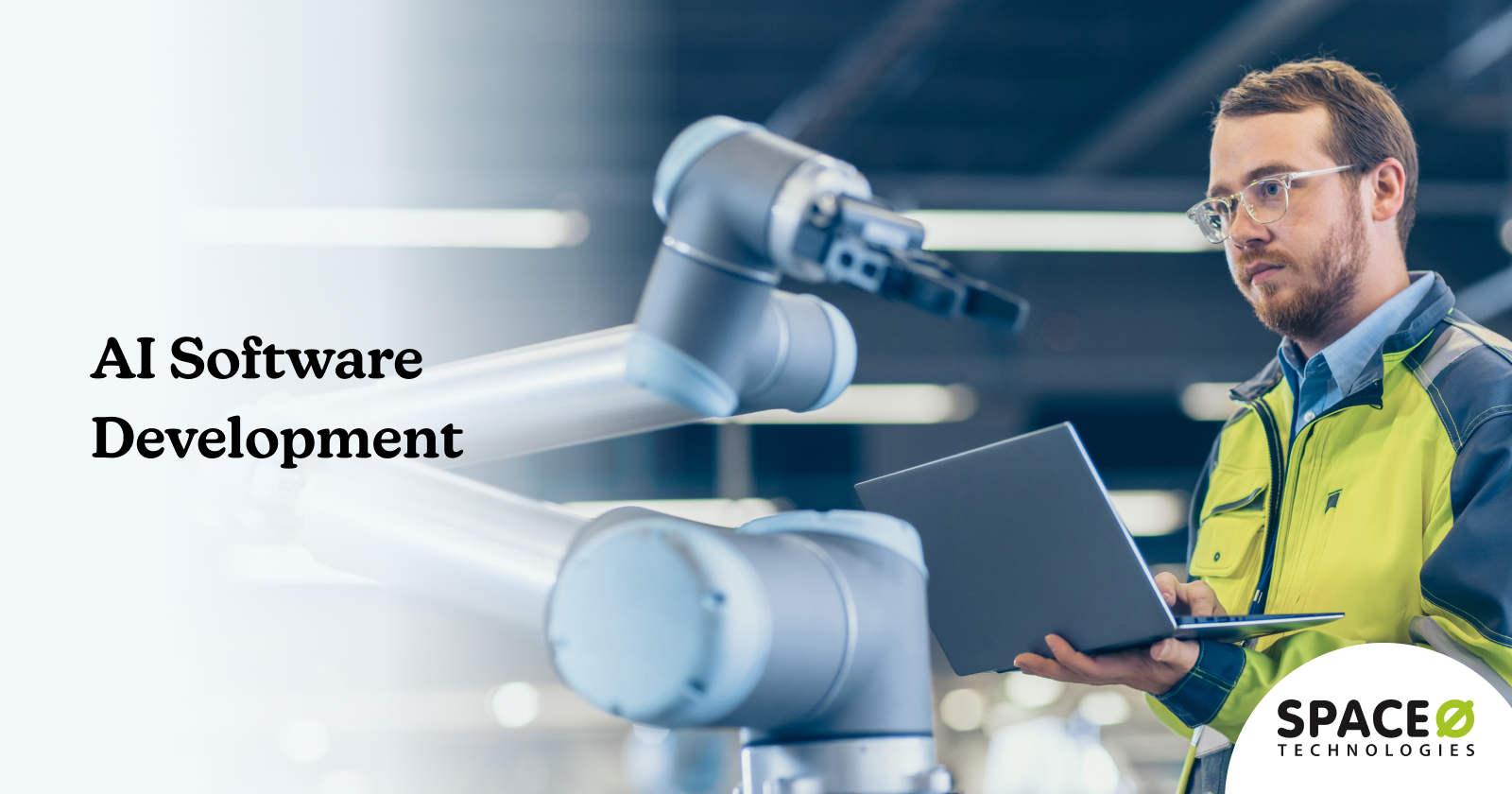
AI Software Development: A Complete Guide to Developing Custom AI Solutions
Discover how you can get started with AI software development. Join us as we outline and explore all the steps to create a functioning AI solution.
-
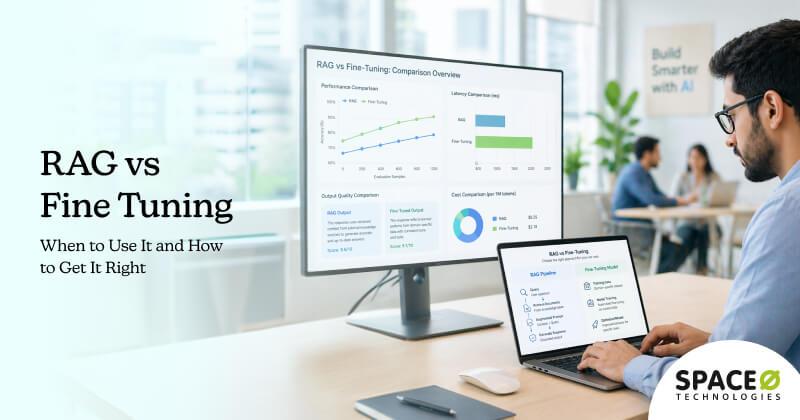
RAG vs. Fine-Tuning: Which Approach Is Right for Your AI System?
Compare RAG vs fine tuning for LLMs. Learn when to use each, cost differences, and how to combine both for enterprise AI
-
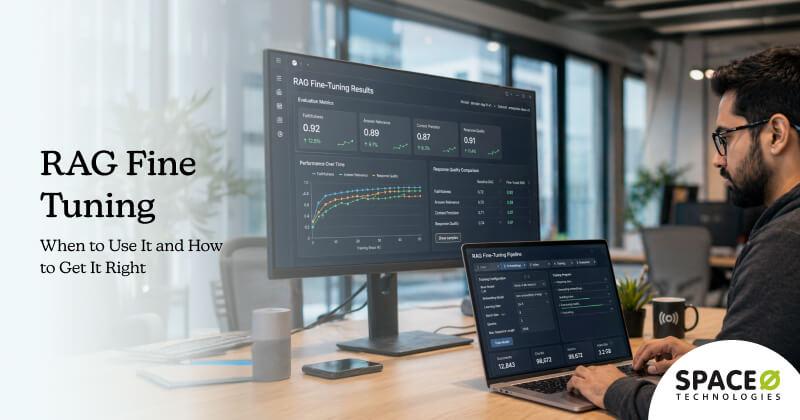
RAG Fine Tuning: When to Use It and How to Get It Right
Learn when and how to fine tune your RAG system. Compare RAG vs fine tuning, explore types, costs, and step-by-step implementation.