

Discover how we developed an AI-powered barbell tracking app that revolutionizes velocity-based training with zero additional hardware requirements.
AI Healthcare Software Development Services
Space-O is an AI software development company specializing in AI-native systems for hospitals, health systems, medical practices, clinics, and healthcare startups across the United States.
Our custom healthcare software development services cover clinical documentation, prior authorization, patient communication, and revenue cycle management – built HIPAA-compliant, FHIR-ready, and integrated with your EHR.
Every engagement starts with workflow discovery and architecture mapping against your actual EHR data, scoped to your specialty, payer mix, and patient population. Not sure where to start? Our healthcare AI consulting services can help.


Let’s Discuss Your Idea
Our Valuable Clients


Custom AI Healthcare Software Development Solutions We Provide
Space-O builds custom AI healthcare software designed to solve specific clinical, operational, and revenue challenges across hospitals, clinics, health systems, and healthcare startups. Our custom healthcare software development solutions span medical software development, hospital management software development, and healthcare application development for providers. Below are the core solution areas we develop.
EHR/EMR Systems with AI Analytics
Most EHR systems are built to store data, not act on it. We build custom EHR and EMR systems with an AI analytics layer that reads your patient data in real time, surfaces early clinical risk signals, and delivers structured decision support directly inside the physician workflow through FHIR integration.
Medical Imaging and Diagnostic Software
Radiologists are managing increasing scan volumes without proportional team growth. We build imaging software using computer vision and deep learning to analyze X-rays, MRIs, and CT scans, flagging abnormalities and providing an AI-assisted second opinion on every read without disrupting the existing radiology workflow.
Clinical Decision Support Systems
Clinical decisions depend on information that is often fragmented across disconnected systems. We develop AI-powered decision support platforms that bring patient population data, clinical guidelines, and real-time lab feeds together, surfacing risk stratification, drug interaction alerts, and treatment recommendations at the point of care.
AI-Powered Telemedicine Platform
Telemedicine expanded access but left the administrative layer unchanged. We build AI telemedicine platforms with AI-powered pre-visit intake and triage, real-time documentation during the encounter, and automated post-visit follow-up, so providers deliver better remote care with less administrative overhead.
Intelligent Patient Portals
Standard patient portals create more work for clinical staff than they save. We build portals with AI interfaces that handle routine patient inquiries, appointment booking, and medication questions autonomously, with data pulled directly from the EHR so patients get accurate responses without staff involvement.
Healthcare Chatbots and Virtual Assistants
Routine patient inquiries consume staff time that should be going to clinical work. We build HIPAA-compliant AI chatbots and virtual assistants that handle symptom checking, scheduling, medication queries, and after-hours support, escalating to clinical staff only when the situation genuinely requires it.
AI-Optimized Practice Management
Practice administrators are making scheduling and staffing decisions without real-time operational data. We build practice management systems where AI predicts no-shows, optimizes scheduling, forecasts revenue, and flags billing workflow gaps as they develop, giving administrators current intelligence rather than lagging reports.
Automated Medical Billing Systems
Coding errors caught after a rejection cost more to fix than errors caught before submission. We build AI billing systems that review every claim before it goes out, detect coding issues, check payer-specific requirements, and flag what needs to be corrected while there is still time to act.
Hospital Management Systems
Hospital operations teams are making real-time decisions without real-time visibility. We build management platforms with AI-driven bed allocation, continuous patient flow modeling, and predictive inventory management so operations teams work from accurate, current facility data rather than delayed manual reports.
Client Testimonials

Project Summary
AI Development
AI System Development for Christian Church
Space-O Technologies developed a private AI system for a Christian church. The team built a system capable of uploading research information, allowing other church workers to query information in a natural way.
View All →
Project Summary
Retail
AI System Development for Gift Search Company
Space-O Technologies has developed an AI system for a gift search company. The team has built a recommendation engine, implemented dynamic pricing, and created tools for personalized marketing campaigns.
View All →
Project Summary
Nonprofit
AI System Development for Christian Church
Space-O Technologies developed a private AI system for a Christian church. The team built a system capable of uploading research information, allowing other church workers to query information in a natural way.
View All →
Project Summary
Consulting
POC Design & Dev for AI Technology Company
Space-O Technologies developed the POC of an AI product for life coaching conversations. Their work included wireframing, app design, engineering, and branding.
View All →
Project Summary
Software
Custom Mobile App Dev & Design for Software Company
Space-O Technologies was hired by a software firm to build a photo editing app that caters to restaurant owners. The team handled the development and design work, including the addition of AI-driven features.
View All →Generative AI Solutions We Build For Healthcare Providers
As part of our AI healthcare solution development services, we deliver generative AI systems that start with clinical documentation, replacing hours of post-visit typing with real-time AI-generated notes, summaries, and prior auth letters.
Clinical Documentation and AI Scribes
Physicians spend more time on documentation than any other clinical task, often working past the last appointment. We build ambient AI scribes that listen to the visit, transcribe it in real time, and generate a structured clinical note before the encounter ends. The physician reviews, signs, and the note flows into your EHR through FHIR.
Prior Authorization Letter Drafting
Prior auth requires a clinical justification built from scratch for every request, against payer deadlines. We build generative AI that pulls clinical data from the EHR, cross-references payer criteria, and drafts the request in the language that payer expects. What takes 20 to 40 minutes of staff time gets drafted in seconds. The clinician reviews and submits.
Discharge Summaries and Patient Communication
Discharge documentation requires two documents: a clinical summary for the chart and a plain-language version for the patient, both written manually after a full shift. We build AI pipelines that generate both from the same encounter and EHR data. The clinical summary meets documentation standards, and the patient version is in plain language they can follow at home.
Agentic AI Solutions We Build For Healthcare Providers
Agentic AI executes multi-step workflows autonomously across systems, not just generating a recommendation for a human to act on. In healthcare, the highest-value applications are the workflows that consume the most staff time: prior auth, care coordination, revenue cycle calls.
Prior Authorization Agents
Prior auth is a multi-step manual process: eligibility check, documentation pull, payer submission, status tracking, and denial escalation. Each step waits on a staff member. We build AI agents that handle the entire workflow end-to-end without human touchpoints between steps. A process that consumes 20 to 40 minutes of staff time per request runs automatically, start to finish.
Care Coordination Agents
Care coordinators manage large patient populations manually and often discover missed follow-ups after gaps have already opened. We build AI agents that monitor care plans across your patient population, identify patients missing follow-up steps, trigger outreach, and update the EHR with outcomes. Gaps close before they become readmissions, without adding to coordinator workload.
Clinical Documentation Agents
Documentation errors and coding gaps caught after the encounter require rework, delay billing, and create compliance exposure. We build AI agents that listen to the visit, generate the clinical note, cross-check ICD and CPT codes, and flag gaps, all before the physician closes the chart. Notes are complete and codes are accurate at the time of signing.
Conversational AI Solutions We Build For Healthcare Providers
We build HIPAA-compliant conversational AI systems for patient-facing communication through text and voice, handling intake, scheduling, triage, and chronic care support.
Patient Intake and Symptom Triage Bots
Front desk staff collect intake information including chief complaint, symptom history, and medications manually, on paper or over the phone, before every appointment. We build AI intake bots that gather structured pre-visit data through text or web, assess symptom severity, route by acuity, and push the completed intake into the EHR before the physician enters the room. Staff handle check-in, not data entry.
Appointment Scheduling
AI Scheduling across multiple locations, provider types, and appointment rules requires staff who know every constraint, and errors still happen when those constraints change. We build conversational AI that handles scheduling through web chat, SMS, and voice, checking real-time availability and applying your rules without staff involvement. Scheduling runs consistently across all locations, around the clock.
Voice AI for Patient Triage
Inbound triage calls require a clinical staff member on every call to assess severity and route appropriately, and call volume peaks when staffing is thinnest. We build phone-based AI that conducts structured symptom assessments, routes high-acuity cases immediately to clinical staff, and handles routine calls without clinical staff time. Triage queues shrink and high-acuity patients reach staff faster.
Revenue Cycle AI Solutions We Build For Healthcare
Revenue cycle teams face rising denial rates, slower reimbursements, and manual coding bottlenecks. AI-native RCM software automates the repetitive, high-volume workflows that drive cost and delay across the billing cycle.
AI-Assisted Medical Coding
Claims with wrong codes come back as denials, and fixing them costs more than catching them before submission. We build AI coding software that reads your documentation, suggests correct ICD and CPT codes, and flags errors before submission. The system learns your specialty’s coding patterns and payer rules, so claims go out correctly coded the first time.
Claim Denial Prediction and Prevention
Most billing teams deal with denials after they happen, and the same rejection often repeats next month. We build AI models that learn from your past denials and payer history to flag high-risk claims before submission, with specific recommendations for what to fix. The problem gets caught before it becomes a denial.
Revenue Analytics and Forecasting
Most revenue cycle reports show last month or last quarter, by which point the problem has already hit cash flow. We build AI models that track revenue by payer, service line, and provider in real time, surface leakage patterns as they develop, and forecast reimbursement trends before they hit cash flow. Your team sees what is happening now, not what happened before.
AI Projects We’ve Developed
-
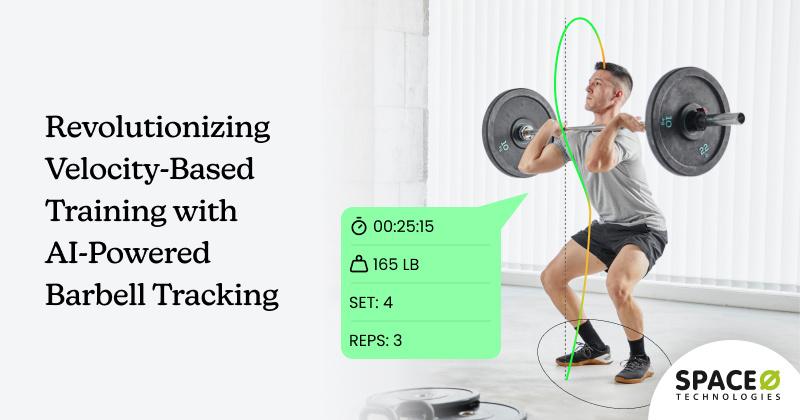
Revolutionizing Velocity-Based Training with AI-Powered Barbell Tracking
-
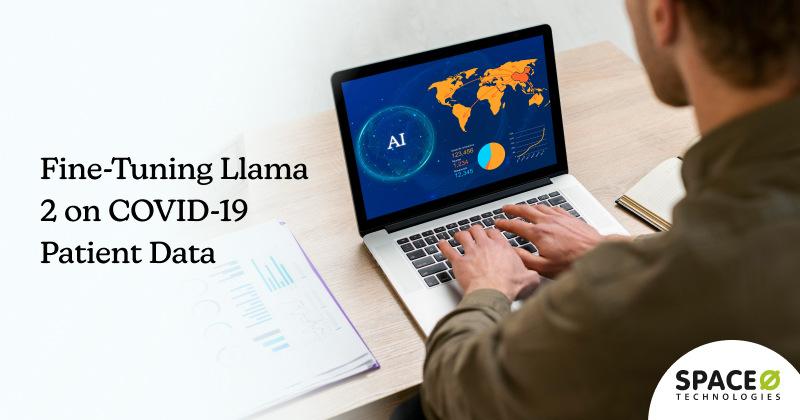
Fine-Tuning Llama 2 on COVID-19 Patient Data
Discover how we fine-tuned Llama 2 to automate COVID-19 patient data analysis and accurately prescribe the right treatment and medication.
-
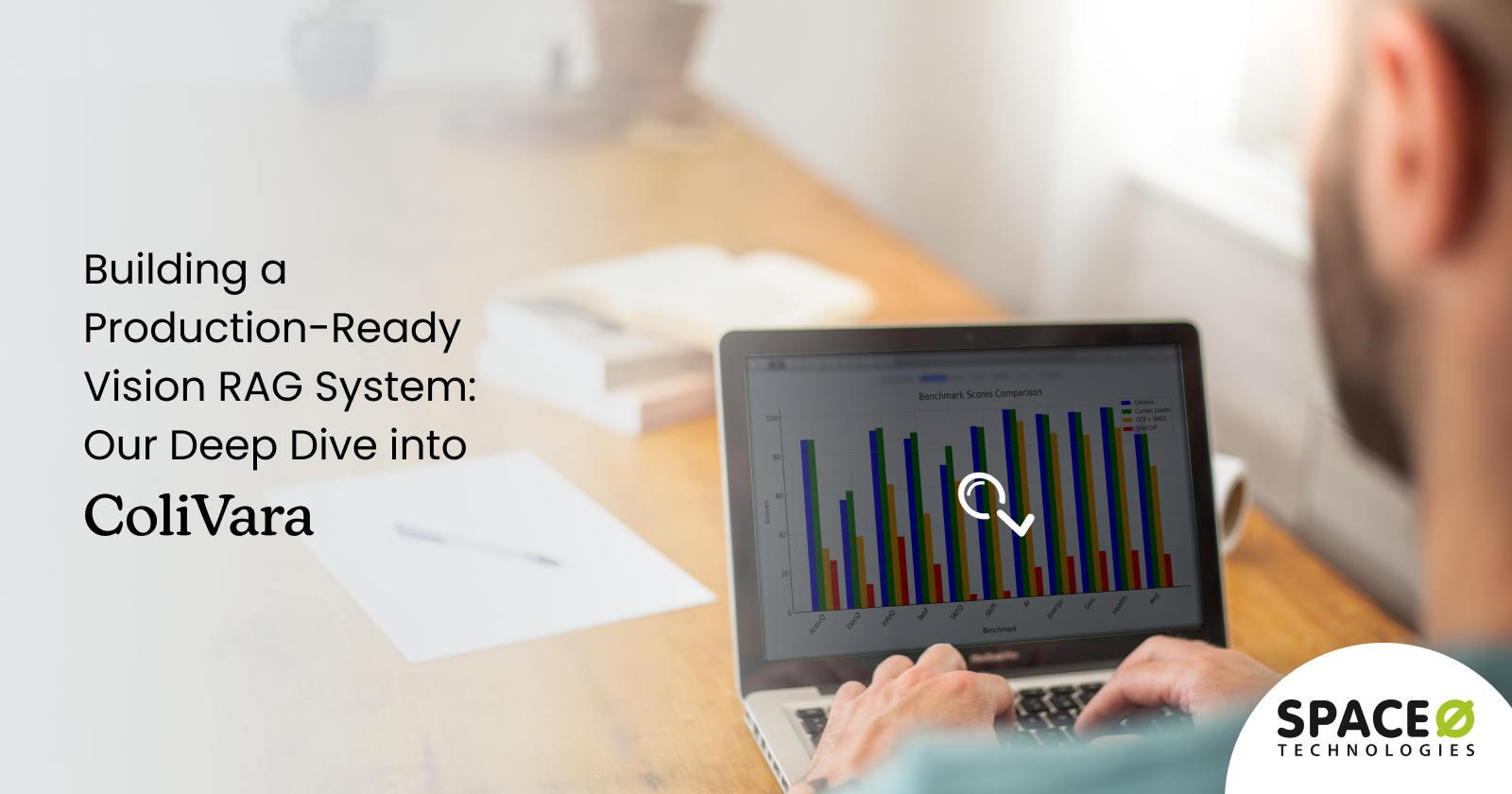
Building a Production-Ready Vision RAG System: Our Deep Dive into ColiVara
How we built a 95% accurate Vision RAG system with ColiVara. Includes hybrid search solution, real costs, performance metrics & comparison with traditional RAG.
Engagement Models We Provide for Developing an AI-Driven Healthcare Solution

Dedicated Development Team
Get a full-time, specialized healthcare software team working exclusively on your project with complete communication and management control.
- Best For: Long-term healthcare software development, EHR implementations, platform evolution
- Timeline: 1–2 weeks setup | 3–24 months engagement
- Team Size: 2–12 healthcare software specialists
- Management: Direct client control with daily standups & weekly reports
- Deliverables: Continuous development with regular sprint releases
Recommended

Fixed Price Projects
End-to-end healthcare software solutions with a well-defined scope, timeline, and budget. Ideal for projects where predictability and compliance are critical.
- Best For: Telemedicine platforms, patient portals, medical billing migrations
- Timeline: 4–32 weeks (based on scope)
- Payment: Milestone-based | 20–50% upfront
- Deliverables: Complete solution with documentation, training & post-launch support

Time & Materials Model
Flexible healthcare software development with transparent hourly billing and adjustable scope to match evolving clinical workflows and compliance needs.
- Best For: Exploratory healthcare AI projects, phased EHR integrations, R&D
- Rates: From $25/hour (based on specialist experience)
- Billing: Weekly or monthly with detailed reports
- Flexibility: Scale team size & adjust project scope anytime
Technology Stack We Use for AI Healthcare Solution Development
We select technology based on the clinical use case, data requirements, and compliance constraints. For deployments requiring full on-premises data control, we work with open source models including Llama, Mistral, and Phi-2.
AI Models
Healthcare Interoperability
Agent Orchestration
Vector Database Management
 Pinecone
HIPAA-Eligible Cloud
Why Choose Space-O For AI Healthcare Software Development
15 Years in Healthcare
Space-O ranks among the top healthcare software development companies for AI-native systems. Our healthcare software developers have been building AI-native medical software that understands the clinical workflows and EHR integration constraints
HIPAA-Compliant from Day One
Security built at every development stage. Compliance documentation including audit trails, access logs, and BAA-ready architecture diagrams is delivered as a project output.
FHIR-Ready for Modern Healthcare Data
AI systems designed to connect with FHIR-compatible EHRs via SMART on FHIR. Your models run on real patient data from your existing systems, not isolated databases.
Named EHR Integration Expertise
Direct integration experience with Epic, Cerner, Allscripts, Oracle Health, athenahealth, and eClinicalWorks. Each platform has different API constraints and we know them all.
How We Develop Healthcare AI Solutions
What separates a reliable AI healthcare solution development company from a generic vendor is how deeply the build process maps to clinical reality. Here is how we work.
FAQs About AI Healthcare Software Development
How do you ensure the AI you build does not make clinical errors that reach a patient?
Every AI system we build includes a human-in-the-loop review layer for any output that could affect a clinical decision. Generative outputs like clinical notes and prior auth letters are drafted by the AI and reviewed by the physician before entering any record. We use RAG grounding, which anchors AI outputs to verified clinical data from your EHR rather than model memory alone. Outputs that fall below a confidence threshold are automatically flagged for human review before proceeding.
How long does it take to build and deploy a custom healthcare AI system?
It depends on scope. A focused module such as a prior auth drafting tool or a conversational intake bot typically takes 8 to 16 weeks from discovery to deployment. A more complex system involving EHR integration, custom model training, and clinical workflow testing runs 16 to 32 weeks. We offer phased delivery so you see working software at each milestone rather than waiting for a full build to complete.
How much does custom healthcare AI software development cost?
Project costs typically range from $50,000 USD for a focused AI module to $500,000 or more for a full platform build. Time and materials engagements start at $25 USD per hour. The most accurate way to scope a project is a discovery call where we map your workflow requirements, compliance constraints, and integration environment. We offer a free consultation to get that started.
Can you work with our existing EHR without replacing it?
Yes, and this is how most of our projects are structured. We build AI layers that connect to your existing EHR through FHIR APIs and HL7 integrations, pulling data in and writing outputs back without disrupting the system your clinical staff already works in. We have direct integration experience with Epic, Cerner, Allscripts, Oracle Health, athenahealth, and eClinicalWorks.
What data do you need from us to start building?
For a discovery engagement we typically need your EHR API documentation, a sample of de-identified or synthetic clinical data, workflow documentation for the process we are automating, and your compliance requirements including any existing BAA templates. We can work with limited data in early phases and scale data access as the project progresses.
Can you build a proof of concept before we commit to a full project?
Yes. Most of our healthcare AI projects start with a time-and-materials proof of concept that validates the technical approach and clinical fit before committing to a full build. A POC typically runs 4 to 8 weeks and covers core functionality, EHR connectivity, and a working demonstration with your clinical team. It gives you a clear basis for a build decision without the risk of a full contract upfront.
What makes healthcare AI development different from building AI for other industries?
AI in healthcare software development is harder than AI in most other industries for three reasons. First, compliance: every system must meet HIPAA standards, which shapes how data is stored, accessed, transmitted, and logged throughout the build. Second, integration complexity: healthcare data lives inside EHR systems with proprietary APIs, FHIR endpoints, and HL7 feeds that require specific expertise to work with correctly. Third, the accuracy standard: AI errors in healthcare can affect patient outcomes, which means every output touching a clinical decision requires human oversight, confidence scoring, and audit trails that most AI systems outside healthcare do not need.
What custom healthcare software development services does Space-O provide?
Space-O provides end-to-end custom healthcare software development services including AI-powered EHR systems, medical imaging software, clinical decision support, practice management systems, hospital management software, revenue cycle AI, generative AI scribes, agentic AI workflows, and conversational AI for patient engagement. Every system is built custom for your clinical environment, HIPAA-compliant, and integrated with your existing EHR. We serve hospitals, health systems, medical practices, clinics, and healthcare startups across the United States.
What separates a healthcare software development company from a healthcare IT vendor?
A healthcare software development company builds custom software development for healthcare around your specific clinical workflows, data infrastructure, and compliance requirements. A healthcare IT vendor sells a pre-built product your organization adapts to fit. The difference matters most in AI: off-the-shelf tools are trained on generic datasets and built for average use cases. Custom medical software development means the system is trained on your patient population, integrated with your specific EHR configuration, and built for the workflows your clinical staff actually runs. If your needs fit a standard product, a vendor is the right choice. If your requirements call for a system that does not exist yet, that is where a healthcare software development agency like Space-O operates.
Insights & Innovations of AI and ML Development
-
AI Software Development: A Complete Guide to Developing Custom AI Solutions
Discover how you can get started with AI software development. Join us as we outline and explore all the steps to create a functioning AI solution.
-
AI Model Development: Process, Types, and How to Build One
AI model development covers data strategy, model training, evaluation, and post-deployment lifecycle. Complete guide to building custom AI/ML models by Space-O AI.
-
What is Business Process Automation? Definition, Types, and How It Works
What is business process automation? BPA uses software to replace manual workflows, from RPA to AI-native automation. Types, examples, and implementation.