

Discover how Space-O Technologies (AI) developed Canvas 8, an AI Figma-to-HTML conversion tool, using ReactJS, NodeJS, and Python.
Hire Scala Developers for High-Performance, Distributed Systems
Space-O AI connects you with dedicated Scala developers who build the systems that power real-time data pipelines, distributed backends, and high-throughput fintech platforms. Our engineers bring deep command of Akka, Apache Spark, Play Framework, and the broader JVM ecosystem, delivering production-ready Scala code that is functional, type-safe, and built to scale.
Finding qualified Scala talent is genuinely difficult. Only around 2.6% of developers worldwide work extensively with Scala, making it one of the most specialized languages in the industry. At Space-O AI, we maintain a pre-vetted bench of Scala specialists with an average of 10+ years of JVM experience, so you are not starting from scratch. Explore our AI and software development services to see how Scala fits into our broader engineering capability.
Whether you need a single senior Scala developer embedded in your team or a full delivery squad for a complex data engineering initiative, Space-O AI matches you with the right talent within 48 hours. Share your requirements and get matched today.


Let’s Discuss Your Project
Our Valuable Clients


What You Can Build When You Hire Scala Developers from Space-O AI
Scala is not a general-purpose language companies use for everything. It is chosen deliberately for systems where performance, correctness, and scale are non-negotiable. Our developers have shipped production solutions across each of these domains.
Real-Time Data Pipelines
Our Scala developers build event-driven data pipelines using Apache Kafka and Spark Streaming that ingest, transform, and route millions of events per second. These pipelines handle backpressure natively, recover from failures without data loss, and integrate directly with cloud-native storage layers on AWS, GCP, and Azure. If your business depends on real-time signals, whether for fraud detection, user behavior analytics, or operational monitoring, this is where Scala-first architecture pays off immediately.
Distributed Backend Systems
Using Akka’s actor model, our engineers build fault-tolerant distributed backends capable of horizontal scaling without the complexity of manual thread management. Actor supervision trees ensure that failures stay isolated and do not cascade, giving you a resilient system that recovers automatically. These backends are the foundation of platforms that cannot afford downtime, including payment processors, logistics coordinators, and high-volume API gateways.
Big Data Processing Platforms
Apache Spark, written in Scala, performs at its best when your data engineers write native Scala rather than Python wrappers. Our Spark developers work directly with RDDs, DataFrames, Datasets, and Spark SQL to build batch and streaming analytics platforms that process petabyte-scale data reliably. We have delivered Spark-on-Scala solutions for healthcare analytics, retail demand forecasting, and financial risk modeling where query performance and data correctness are both critical.
Fintech and Trading Systems
Scala’s strict type system and functional programming model make it the language of choice for financial engineering teams where a runtime error carries real financial cost. Our fintech-focused Scala developers build low-latency transaction processing engines, risk scoring systems, order management platforms, and reconciliation pipelines. They are familiar with FIX protocol integrations, event sourcing patterns, and CQRS architectures that are standard in institutional finance.
AI and ML Model Serving Pipelines
As AI workloads move into production, organizations need robust serving infrastructure that can handle high-throughput prediction requests without bottlenecks. Our Scala developers build the backend layer that exposes ML model inference APIs, manages feature pipelines, integrates with Python-based model servers like TorchServe and TF Serving, and handles batching, caching, and rate limiting at scale. This is one of the fastest-growing use cases for Scala in 2026.
SaaS Platform Backends
Play Framework provides a reactive, stateless HTTP stack that suits multi-tenant SaaS architectures well. Our developers use Play alongside Akka HTTP and http4s to build REST and gRPC APIs that handle concurrent users efficiently, enforce strong data contracts through Scala’s type system, and integrate cleanly with PostgreSQL, Cassandra, and Redis. The result is a backend that can grow with your user base without expensive rewrites.
Types of Scala Developers You Can Hire
Scala is used across very different engineering disciplines. We staff each of these specialist profiles and can match you based on your exact stack, not just language familiarity.
Scala Backend Engineers
These developers focus on API development, microservices architecture, and server-side application logic using Play Framework, Akka HTTP, and http4s. They design RESTful and gRPC services, manage authentication and authorization flows, and build the integration layer between your frontend products and your data infrastructure. Backend engineers from our team are comfortable working in existing codebases and can ramp up on your conventions quickly.
Scala Data Engineers
Scala data engineers specialize in building and maintaining large-scale data pipelines using Apache Spark, Kafka, and Flink. They own the full data lifecycle from ingestion and transformation through to storage and delivery, designing systems that handle both batch and streaming workloads. These engineers are also familiar with cloud-native data platforms on AWS EMR, GCP Dataproc, and Azure HDInsight, and can architect solutions that balance cost, latency, and correctness.
Scala Distributed Systems Engineers
These are senior engineers who specialize in the hardest problems in distributed computing: consensus, consistency, fault tolerance, and eventual consistency. They use Akka Cluster, event sourcing, and CQRS patterns to build systems that behave correctly even under partial failure. If you are building a platform where multiple services must coordinate reliably at scale, these engineers are the specialists you need.
Scala Fintech Developers
Fintech Scala developers bring both language depth and domain knowledge. They understand the operational requirements of financial systems, including audit trails, transaction atomicity, regulatory compliance hooks, and the latency constraints of high-frequency workflows. They have built or contributed to trading systems, payment engines, risk models, and reconciliation pipelines, and they write Scala that reflects both engineering rigor and financial domain awareness.
Scala Full-Stack Developers
For teams that need both a robust Scala backend and a connected frontend, our full-stack Scala developers work across the entire application layer. They combine Play Framework or Akka HTTP on the backend with Scala.js on the frontend, or integrate with React, Vue, or Angular where appropriate. This is particularly useful for smaller teams where context switching between backend and frontend work is unavoidable.
Scala 3 Migration Specialists
Scala 3 introduces major language changes including a new metaprogramming system, union and intersection types, context functions, and a simplified implicit model. Migrating from Scala 2 is not a trivial refactor. Our migration specialists have hands-on experience guiding codebases through the Scala 3 transition, updating macro dependencies, resolving type inference differences, and upgrading third-party library compatibility. If your team has been delaying a Scala 3 migration, these engineers can accelerate it safely.
AI Projects We Have Developed
-
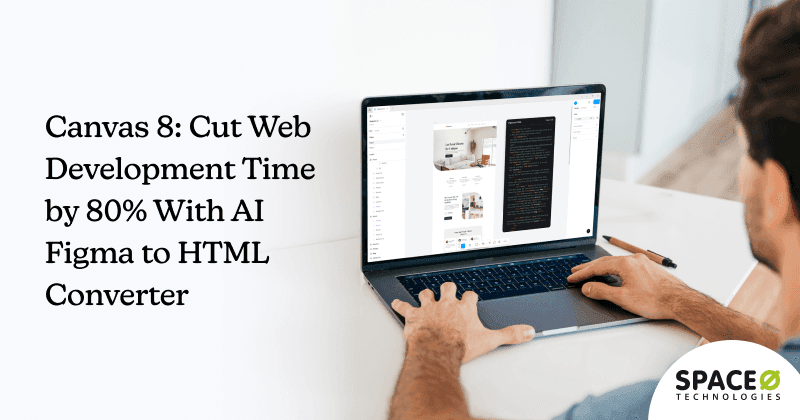
Canvas 8: Cut Web Development Time by 80% With AI Figma to HTML Converter
-

How We Cut AI Agent Costs by 93% (And Stopped Fighting Our Configuration System)
How task-based model selection cut our multi-agent AI costs by 93% and reduced provider switching from 30 minutes to 5 seconds.
-
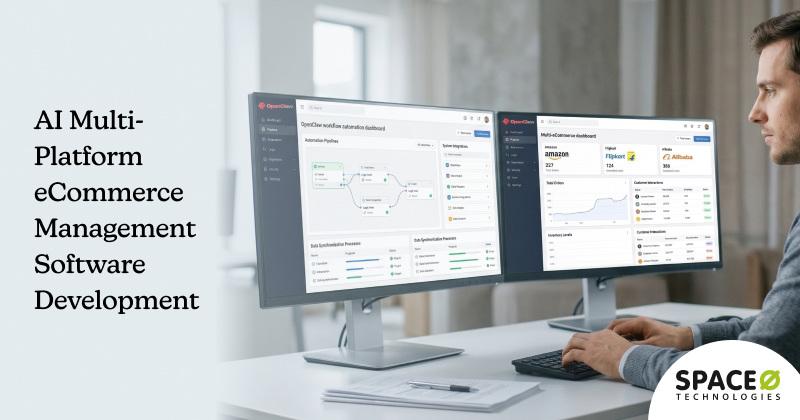
How We Developed an OpenClaw-Based Multi-Platform eCommerce Business Management Software
Learn how we developed a centralized AI eCommerce management platform that helps sellers centrally manage eCommerce across multiple marketplaces.
Client Testimonials

Project Summary
AI Development
AI System Development for Christian Church
Space-O Technologies developed a private AI system for a Christian church. The team built a system capable of uploading research information, allowing other church workers to query information in a natural way.
View All →
Project Summary
Retail
AI System Development for Gift Search Company
Space-O Technologies has developed an AI system for a gift search company. The team has built a recommendation engine, implemented dynamic pricing, and created tools for personalized marketing campaigns.
View All →
Project Summary
Nonprofit
AI System Development for Christian Church
Space-O Technologies developed a private AI system for a Christian church. The team built a system capable of uploading research information, allowing other church workers to query information in a natural way.
View All →
Project Summary
Consulting
POC Design & Dev for AI Technology Company
Space-O Technologies developed the POC of an AI product for life coaching conversations. Their work included wireframing, app design, engineering, and branding.
View All →
Project Summary
Software
Custom Mobile App Dev & Design for Software Company
Space-O Technologies was hired by a software firm to build a photo editing app that caters to restaurant owners. The team handled the development and design work, including the addition of AI-driven features.
View All →Engagement Models for Hiring Scala Developers

Dedicated Scala Developers
A full-time developer who works exclusively on your project, joins your standups, communicates directly on Slack or Teams, and operates within your sprint cycles. This model works best when you need consistent output, deep integration with your existing team, and a developer who builds context in your codebase over time.
- Full-time commitment with daily availability
- Direct communication, no intermediaries
- Scales to a team as your needs grow
Recommended

Staff Augmentation
Extend your existing Scala team with one to ten pre-vetted engineers on demand. Staff augmentation is the right choice when you have a proven team that needs additional capacity, a specific skill gap to fill (Spark expertise, Akka migration, Scala 3 transition), or a time-bound initiative that does not justify full-time hiring.
- Plug specialists directly into your existing workflows
- Scale headcount up or down with two weeks’ notice
- No long-term hiring commitment required

Project-Based Engagement
A fixed-scope engagement where Space-O AI owns the full delivery of a defined Scala project. We assign a project lead, provide weekly milestone updates, and hand over complete source code with documentation at the end. This model suits companies that have a well-defined deliverable and want outcome accountability rather than time-and-materials billing.
- Milestone-based delivery with clear acceptance criteria
- Full IP ownership transferred at project close
- No overhead of managing individual developers
Awards and Recognitions That Validate Our AI Experience

Scala Technology Stack Our Developers Use
AI & LLM Platforms
Fine-Tuning Frameworks
RAG & Retrieval
API Frameworks
CRM & ERP Systems
AI Orchestration
RPA Platforms
Cloud AI Services
Vector Databases
Development Languages
Evaluation & Observability
Deployment & DevOps
Monitoring & Security
How to Hire Scala Developers from Space-O AI
Frequently Asked Questions About Hiring Scala Developers
What is a Scala developer and what do they do?
A Scala developer is a software engineer who specializes in the Scala programming language, which runs on the Java Virtual Machine and combines object-oriented and functional programming paradigms. Scala developers typically build distributed backend systems, big data processing pipelines using Apache Spark, reactive applications using Akka, and type-safe web APIs using Play Framework or http4s. They are most commonly found in fintech, data engineering, and large-scale SaaS platform roles where performance and correctness are critical requirements.
How long does it take to hire a Scala developer?
Through traditional recruitment, hiring a senior Scala developer in the US takes an average of three to six months because the talent pool is small and competition is high. Through Space-O AI, you receive matched developer profiles within 48 hours of submitting your requirements. The time from first contact to a developer starting work is typically one to two weeks, including interviews, selection, and contract setup.
What skills should a Scala developer have?
A strong Scala developer should have solid command of functional programming principles, hands-on experience with at least one major Scala framework (Akka, Spark, or Play Framework), deep understanding of Scala’s type system including generics and type classes, and familiarity with JVM performance tuning. For data-focused roles, Apache Spark and Kafka experience are essential. For distributed systems roles, Akka concurrency and event sourcing knowledge are the primary requirements.
Can I hire a Scala developer for a short-term project?
Yes. Space-O AI offers project-based engagements with fixed scope and milestone-based delivery, as well as part-time staff augmentation for teams that need Scala expertise without a full-time commitment. Short-term engagements work well for Scala 3 migrations, data pipeline builds, performance audits, and architecture reviews.
What frameworks do Scala developers use?
The most widely used Scala frameworks and libraries include Akka for reactive and distributed systems, Apache Spark for big data processing, Play Framework for web application backends, http4s and ZIO HTTP for purely functional HTTP APIs, and Cats and ZIO for functional effect management. For messaging and streaming, Kafka with the Scala client or Akka Streams Kafka connector is standard. SBT is the primary build tool for most Scala projects.
What is the difference between a Scala developer and a Java developer?
Both Scala and Java run on the JVM, but they are different languages with different programming models. Scala developers work primarily in a functional programming paradigm using immutable data, higher-order functions, and effect types, while Java developers typically use an object-oriented, imperative approach. Scala’s type system is significantly more expressive than Java’s, enabling patterns like type classes and higher-kinded types that Java cannot express. A Java developer is not automatically qualified for Scala work and will typically require six to twelve months of Scala-focused experience before writing idiomatic Scala.
Should I hire a Scala 2 or Scala 3 developer?
For new projects, hire a Scala 3 developer. The language improvements in Scala 3 produce cleaner, more maintainable code, and the core ecosystem has Scala 3 support. For existing Scala 2 codebases, a Scala 2 specialist will be productive immediately. If you are planning a migration from Scala 2 to Scala 3, hire a developer with specific migration experience rather than someone who only knows one version.
How does Space-O AI vet Scala developers?
Space-O AI vets Scala developers through a multi-stage process that includes a language-specific technical assessment covering functional programming, type system depth, and framework-specific tasks relevant to their specialty. Candidates also complete a distributed systems or data engineering practical exercise depending on their focus area, followed by a communication and problem-solving interview. Only developers who pass all three stages join the bench. We do not hire generalist developers and reskill them for Scala roles.