

Discover how Space-O Technologies (AI) developed Canvas 8, an AI Figma-to-HTML conversion tool, using ReactJS, NodeJS, and Python.
Hire PyTorch Developers
Space-O AI’s PyTorch developers build production-ready deep learning systems across computer vision, natural language processing, generative AI, reinforcement learning, and MLOps. From designing custom neural network architectures to fine-tuning large language models on domain-specific datasets, our engineers handle the complete PyTorch development lifecycle with the kind of rigor that research prototypes rarely get but production systems always demand.
Our developers are pre-vetted, hold 5+ years of hands-on PyTorch experience, and have delivered AI solutions across healthcare, fintech, manufacturing, legal tech, e-commerce, and autonomous systems. When you hire PyTorch developers from Space-O AI, you engage engineers who understand not just the framework but the business problem it needs to solve. Every engagement comes with dedicated project management, transparent reporting, and a no-risk trial period.
Whether you need a dedicated PyTorch developer embedded in your team or a complete ML project delivered end to end, our custom AI development services are designed to scale with your needs. We can onboard the right engineer within 48 hours. Share your requirements and we will match you with a pre-screened developer the same day.


Let’s Discuss Your Project
Our Valuable Clients


PyTorch Development Services We Offer
Custom Deep Learning Model Development
Building task-specific neural networks requires deep understanding of both the problem domain and PyTorch’s dynamic computation graph. Our developers design and train CNNs, RNNs, LSTMs, and Transformer-based architectures from scratch, tuned to your dataset, latency targets, and accuracy requirements. Every architecture decision is validated through rigorous experimentation, ablation studies, and benchmark comparisons before moving to production. The result is a model built for your data, not borrowed from a generic tutorial.
Computer Vision Solutions
Our PyTorch developers build computer vision systems for object detection, image classification, semantic segmentation, instance segmentation, and real-time video analysis using TorchVision, Detectron2, and OpenCV. Applications span medical imaging diagnostics, retail shelf monitoring, manufacturing quality inspection, and autonomous vehicle perception stacks. We optimize inference pipelines for edge deployment as well as cloud-based batch processing workloads. Each system ships with accuracy benchmarks, latency profiles, and deployment documentation.
Natural Language Processing (NLP)
From sentiment analysis and named entity recognition to question answering and multilingual document processing, our NLP engineers build production-grade text AI using TorchText and Hugging Face Transformers on top of PyTorch. We handle the complete pipeline from data preprocessing and tokenization through model training, evaluation, and API serving. Our NLP solutions power contract analysis tools, customer support automation, clinical documentation workflows, and semantic search systems. We select the right architecture for your task rather than defaulting to the largest available model.
LLM Fine-Tuning and Generative AI
Fine-tuning large language models on domain-specific data unlocks capabilities that general-purpose models cannot match. Our developers use PyTorch alongside PEFT, LoRA, and QLoRA techniques to fine-tune foundation models including LLaMA, Mistral, Falcon, and Phi on your proprietary datasets. We also build generative AI applications including RAG pipelines, AI agents, and multimodal systems. Every fine-tuning project includes evaluation benchmarks, safety testing, and a deployment readiness assessment before going live.
PyTorch Model Training and Optimization
Training large models efficiently requires more than writing a training loop. Our engineers implement distributed training across multi-GPU and multi-node setups using DistributedDataParallel and FSDP, apply mixed-precision training with PyTorch AMP, and use gradient checkpointing to manage memory constraints at scale. We run systematic hyperparameter optimization using Optuna and Ray Tune and document every configuration decision.
Model Deployment and MLOps
A trained model is only valuable when it runs reliably in production. Our MLOps-capable PyTorch developers deploy models using TorchServe, ONNX Runtime, FastAPI, and containerized microservices on AWS SageMaker, Azure ML, and GCP Vertex AI. We build CI/CD pipelines for model retraining, set up monitoring for data drift and performance degradation, and implement model versioning with MLflow and DVC. Your deployed model receives the same engineering rigor as any production software system.
PyTorch Migration and Integration
If your team has existing models in TensorFlow, Keras, or scikit-learn, our developers handle the migration to PyTorch while preserving model performance and production stability. We also integrate trained PyTorch models into existing web applications, mobile apps, and data pipelines via REST APIs and gRPC endpoints. Every migration project includes full test coverage to validate parity between the original and migrated model. Integration work includes latency profiling and optimization to meet your SLA requirements.
Reinforcement Learning Solutions
Our PyTorch developers implement reinforcement learning systems for robotics control, game AI, recommendation optimization, and autonomous decision-making. Using Stable-Baselines3 and custom PyTorch RL implementations, we design reward functions, build simulation environments, and train agents that perform reliably outside sandbox conditions. We work with both model-free algorithms (PPO, SAC, DQN) and model-based approaches depending on your environment constraints.
Data Pipeline and Feature Engineering
High-quality training data is as important as the model architecture itself. Our engineers build robust data pipelines using PyTorch DataLoader, Albumentations, and custom preprocessing modules that handle large-scale datasets efficiently. We design feature engineering workflows for structured, image, text, and time-series data, and implement augmentation strategies that improve model generalization. Pipeline work includes data validation, versioning with DVC, and integration with your existing data warehouse or lakehouse infrastructure.
Types of PyTorch Developers You Can Hire
PyTorch Deep Learning Engineer
Deep learning engineers on our team specialize in neural architecture design, model training, and research-grade experimentation. They are comfortable implementing architectures from published papers, designing custom loss functions, and running systematic ablation studies to validate design choices. These engineers are the right fit when you need to build models from the ground up or push the accuracy ceiling on a challenging problem.
PyTorch Computer Vision Developer
Our computer vision developers have hands-on experience building image and video AI systems across medical imaging, surveillance, retail automation, and autonomous systems. They are proficient with TorchVision, Detectron2, OpenCV, and custom dataset pipelines for annotated image data. Hire these developers when your project involves any visual perception task, from simple image classification to complex multi-object tracking and real-time inference.
PyTorch NLP Engineer
NLP engineers on our team build text-based AI models, conversational systems, document processors, and multilingual applications using PyTorch and Hugging Face. They handle the complete pipeline from raw text ingestion and tokenization through model training and API serving. These developers are ideal for projects involving document understanding, semantic search, chatbots, or any application where language is the primary input signal.
PyTorch MLOps Engineer
MLOps engineers bridge the gap between model development and production reliability. They set up CI/CD pipelines for model retraining, configure drift monitoring, implement model versioning, and build the infrastructure that keeps PyTorch models running accurately at scale. Hire these engineers when you have trained models that need a production home or when your existing ML systems need better observability and governance.
PyTorch Research Engineer
Research engineers implement state-of-the-art architectures from academic papers and explore novel model designs for specialized problems. They work closely with R&D teams and are comfortable operating at the frontier of what the PyTorch ecosystem supports. These engineers are most valuable for companies running internal AI research, building proprietary architectures, or exploring new application domains before committing to a production build.
PyTorch Generative AI Developer
Our generative AI developers build diffusion models, fine-tuned LLMs, multimodal systems, and AI agent pipelines using PyTorch and Hugging Face. They are experienced with PEFT and LoRA fine-tuning, RAG architecture design, and integrating generative models into product workflows. Hire these engineers when your roadmap includes content generation, AI assistants, synthetic data creation, or any application where generative capabilities are central to the product.
AI Projects We Have Developed
-
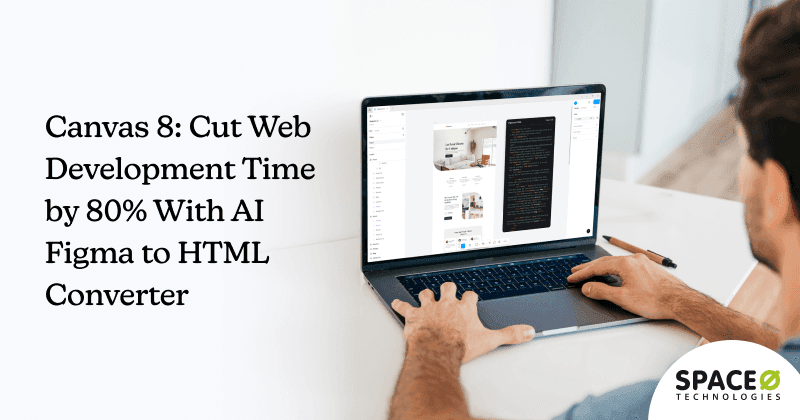
Canvas 8: Cut Web Development Time by 80% With AI Figma to HTML Converter
-

How We Cut AI Agent Costs by 93% (And Stopped Fighting Our Configuration System)
How task-based model selection cut our multi-agent AI costs by 93% and reduced provider switching from 30 minutes to 5 seconds.
-

How We Developed an OpenClaw-Based Multi-Platform eCommerce Business Management Software
Learn how we developed a centralized AI eCommerce management platform that helps sellers centrally manage eCommerce across multiple marketplaces.
Client Testimonials

Project Summary
AI Development
AI System Development for Christian Church
Space-O Technologies developed a private AI system for a Christian church. The team built a system capable of uploading research information, allowing other church workers to query information in a natural way.
View All →
Project Summary
Retail
AI System Development for Gift Search Company
Space-O Technologies has developed an AI system for a gift search company. The team has built a recommendation engine, implemented dynamic pricing, and created tools for personalized marketing campaigns.
View All →
Project Summary
Nonprofit
AI System Development for Christian Church
Space-O Technologies developed a private AI system for a Christian church. The team built a system capable of uploading research information, allowing other church workers to query information in a natural way.
View All →
Project Summary
Consulting
POC Design & Dev for AI Technology Company
Space-O Technologies developed the POC of an AI product for life coaching conversations. Their work included wireframing, app design, engineering, and branding.
View All →
Project Summary
Software
Custom Mobile App Dev & Design for Software Company
Space-O Technologies was hired by a software firm to build a photo editing app that caters to restaurant owners. The team handled the development and design work, including the addition of AI-driven features.
View All →Engagement Models for Hiring PyTorch Developers

Dedicated PyTorch Developers
Embed full-time PyTorch developers directly into your team. You set the priorities, manage the roadmap, and the developer works exclusively on your project with the same commitment as an in-house hire, without the overhead of recruiting, benefits, or equipment.
- 160 hrs/month dedicated capacity
- Daily standups and active sprint participation
- Direct Slack or Teams access with same-day response
Recommended

AIOps Staff Augmentation
Scale your existing AI or engineering team with pre-vetted PyTorch engineers on demand. No long hiring cycles, no overhead costs, and no long-term commitment beyond what your project requires.
- Onboard in 48 to 72 hours
- No long-term commitment required
- Integrates seamlessly with your existing tools and workflow

Project-Based Engagement
Hand us a defined AI or ML project and we deliver end to end. From architecture design through training, evaluation, and production deployment, our team owns the full lifecycle with milestone-based transparency.
- End-to-end ownership from architecture to deployment
- Milestone-based delivery with full transparency
- Post-launch support and model monitoring included
Awards and Recognitions That Validate Our AI Experience


Technology Stack Our PyTorch Developers Use
AI & LLM Platforms
Fine-Tuning Frameworks
RAG & Retrieval
API Frameworks
CRM & ERP Systems
AI Orchestration
RPA Platforms
Cloud AI Services
Vector Databases
Development Languages
Evaluation & Observability
Deployment & DevOps
Monitoring & Security
Process to Hire PyTorch Developers in 5-Steps
Frequently Asked Questions
What does a PyTorch developer do?
A PyTorch developer builds, trains, evaluates, and deploys machine learning models using the PyTorch framework. Depending on their specialization, they may focus on computer vision, NLP, generative AI, reinforcement learning, or MLOps. Senior PyTorch developers also own architecture decisions, training infrastructure design, and production deployment pipelines.
How long does it take to hire PyTorch developers?
Through Space-O AI, you receive pre-screened developer profiles within 24 hours and have a developer onboarded and contributing within 48 hours. Traditional in-house hiring for ML roles typically takes 6 to 12 weeks when factoring in sourcing, interviews, and notice periods.
What skills should PyTorch developers have?
Core skills include Python proficiency, understanding of neural network architectures (CNNs, RNNs, Transformers), hands-on experience with PyTorch’s autograd system, CUDA and GPU optimization, and experience with at least one deployment stack such as TorchServe, ONNX, or FastAPI. Domain expertise in your specific area and MLOps experience are strong additional qualifiers.
Can I hire PyTorch developers for a short-term project?
Yes. Space-O AI offers project-based and staff augmentation engagements with no long-term commitment required. You can hire PyTorch developers for a defined sprint, a single model training task, or a complete end-to-end project with a fixed timeline and milestone-based delivery.
How do I assess PyTorch developers’ skills before hiring?
The most reliable method is a practical take-home assessment that mirrors your actual project requirements. Ask candidates to train a model on a provided dataset, debug a broken training loop, or optimize an inference pipeline. Pair this with a technical interview led by an ML expert to evaluate architecture judgment and production experience depth.
What engagement models are available to hire PyTorch developers?
Space-O AI offers three models: dedicated developer (full-time, embedded in your team), staff augmentation (on-demand scaling of your existing team), and project-based engagement (end-to-end delivery with milestone transparency). All three models include a 2-week no-risk trial period.
Do Space-O AI PyTorch developers work in US time zones?
Yes. Our developers are available with time-zone aligned working hours to cover US, UK, and EU business hours. We ensure a minimum 4 to 6 hour daily overlap with your core team for real-time collaboration, standups, and code reviews.
Can PyTorch developers handle LLM fine-tuning and generative AI?
Yes. Our generative AI developers are experienced with fine-tuning LLaMA, Mistral, Falcon, and other open-source foundation models using PEFT, LoRA, and QLoRA techniques on top of PyTorch. We also build RAG pipelines, AI agents, and multimodal generative systems for production deployment.