

Discover how Space-O Technologies (AI) developed Canvas 8, an AI Figma-to-HTML conversion tool, using ReactJS, NodeJS, and Python.
Hire AIOps Engineers
Space-O AI provides dedicated AIOps engineers who design, implement, and manage AI-driven IT operations systems for enterprise environments. Our engineers specialize in anomaly detection, intelligent event correlation, automated root cause analysis, log management, and self-healing infrastructure across AWS, Azure, and GCP. Whether you need to reduce alert noise, automate incident triage, or build a full observability pipeline, our certified AIOps talent delivers measurable outcomes from day one.
With 200+ AI projects delivered and clients across fintech, healthcare, and cloud-native SaaS, Space-O AI brings certified expertise in Datadog, Dynatrace, Splunk, and ServiceNow to your IT operations. Our engineers are not generalists retooled for AIOps. They are specialists who track MTTR, MTTD, and alert noise reduction as their core KPIs. See how our AI development services fit within a wider intelligent operations strategy.
From a single embedded engineer to a fully managed AIOps team, we offer flexible engagement models that match your operational timeline and budget. Most clients have a certified engineer embedded in their infrastructure within 48 to 72 hours.


Let’s Discuss Your Project
Our Valuable Clients


What Our AIOps Engineers Build for You
Every AIOps engagement at Space-O AI is scoped around the outcomes you need, not a fixed menu of deliverables. Our engineers combine platform expertise with ML engineering and SRE discipline to build systems that reduce operational overhead and improve infrastructure reliability at scale.
Anomaly Detection and Intelligent Alerting
Our AIOps engineers deploy ML-based anomaly detection models that monitor metrics, logs, and distributed traces simultaneously. Rather than relying on static threshold alerts, they build adaptive models that learn your infrastructure baseline behavior and surface only high-confidence signals. Alert deduplication and noise suppression logic reduces operational overhead for your NOC and on-call teams. The result is a significant reduction in alert fatigue without sacrificing detection coverage.
Automated Root Cause Analysis (RCA)
Pinpointing the source of an incident across microservices, cloud layers, and third-party dependencies is one of the most time-consuming parts of IT operations. Our engineers build ML-driven RCA pipelines that correlate events across your entire observability stack and surface probable root causes in minutes rather than hours. This closes the gap between detection and remediation, directly improving your MTTD and MTTR metrics. Closed-loop automation ensures that recurring incidents trigger pre-approved remediation workflows without human intervention.
Self-Healing Infrastructure and Auto-Remediation
Beyond detection, our engineers build event-driven auto-remediation systems that execute runbooks automatically when known failure patterns are detected. Using Ansible, Terraform, and Kubernetes operators, they deploy self-healing workflows that restart services, scale resources, and reroute traffic without requiring manual intervention. This dramatically reduces the operational burden on your engineering teams during incident windows. Clients typically see a 60 to 70 percent reduction in manual incident handling within the first quarter of deployment.
Predictive Capacity Planning
Our AIOps engineers use time-series forecasting models to predict infrastructure demand before it strains your systems. By analyzing historical workload patterns, seasonal trends, and event-driven spikes, they surface capacity warnings weeks ahead of potential incidents. This enables your teams to provision resources proactively rather than reactively, preventing outages while also identifying over-provisioned resources that can be right-sized. For cloud-native environments, predictive capacity planning directly reduces infrastructure spend.
Log Management and Full-Stack Observability Pipelines
Effective AIOps depends on clean, well-structured data pipelines that ingest MELT data (metrics, events, logs, traces) from every layer of your infrastructure. Our engineers design and implement log management architectures using ELK Stack, Splunk, Datadog, and OpenTelemetry, ensuring that your observability data is normalized, enriched, and queryable in real time. They build distributed tracing pipelines for microservices environments and configure retention policies that balance observability depth with storage cost.
AIOps and ServiceNow ITSM Integration
Most enterprise IT environments run ServiceNow, Jira, or PagerDuty as their incident management backbone. Our engineers build bi-directional integrations between your AIOps platform and your ITSM tooling, ensuring that detected incidents automatically create, route, and escalate tickets based on severity and team ownership. Automated ticket resolution updates when remediations are confirmed close the loop on incident workflows without manual status updates. This integration layer turns your AIOps investment into measurable SLA performance improvement.
Types of AIOps Engineers You Can Hire from Space-O AI
AIOps is a broad discipline. Depending on your current observability maturity and operational gaps, you may need a specialist in platform tooling, ML modeling, automation engineering, or enterprise architecture. We offer access to all of these profiles.
AIOps Observability Engineers
These engineers specialize in building and maintaining full-stack observability pipelines using Prometheus, Grafana, Datadog, and OpenTelemetry. They design MELT data ingestion architectures, configure dashboards and alerting rules, and ensure your monitoring coverage spans every layer of a cloud-native or hybrid environment. Ideal for teams that have observability tooling in place but lack the expertise to extract actionable signal from the data it generates.
AIOps ML Engineers
These engineers bring machine learning expertise applied specifically to IT operations data. They build and train anomaly detection models, time-series forecasting pipelines, and event correlation algorithms using TensorFlow, PyTorch, and Scikit-learn. Their work converts raw infrastructure telemetry into predictive intelligence that reduces reactive firefighting. Best suited for organizations ready to move from rule-based alerting to adaptive, model-driven operations.
AIOps SRE and Reliability Engineers
These engineers focus on incident management process, MTTR optimization, and the SRE practices that drive long-term reliability. They define error budgets, build post-incident review processes, implement chaos engineering tests, and work to systematically eliminate the root causes of repeat incidents. Best for engineering organizations that already have monitoring in place but are struggling to improve reliability metrics over time.
AIOps Platform Engineers
These engineers are certified in enterprise AIOps platforms such as Moogsoft, BigPanda, IBM Watson AIOps, and Dynatrace. They handle platform implementation, configuration, integration with existing tooling, and ongoing tuning to maximize signal quality. Clients who are deploying a new AIOps platform or migrating from a legacy monitoring stack benefit most from this profile.
AIOps Automation Engineers
These engineers specialize in runbook automation, event-driven remediation workflows, and infrastructure automation using Ansible, Terraform, and Kubernetes operators. They translate incident response procedures into automated workflows that execute without human intervention, reducing both MTTR and on-call burden. Ideal for organizations that have solid detection in place but still rely too heavily on manual remediation steps.
AIOps Architects
AIOps architects design the end-to-end operational intelligence strategy for your organization. They assess your current observability maturity, define the target architecture, select the right tool stack for your scale and budget, and build the roadmap from reactive IT operations to autonomous self-healing infrastructure. This profile is best for enterprises building their AIOps capability from scratch or consolidating a fragmented monitoring landscape.
AI Projects We Have Developed
-
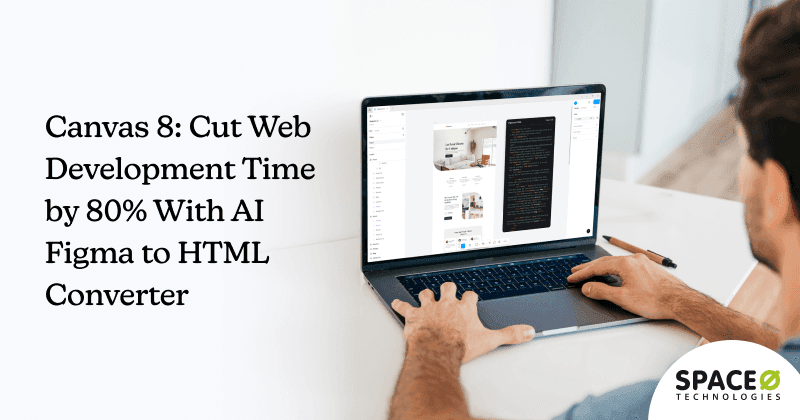
Canvas 8: Cut Web Development Time by 80% With AI Figma to HTML Converter
-
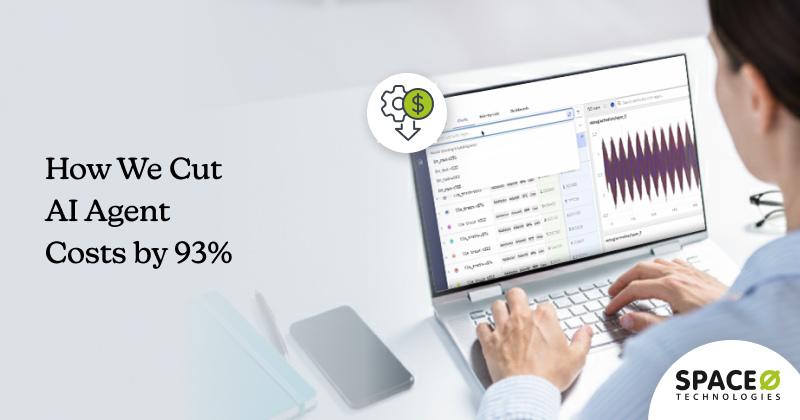
How We Cut AI Agent Costs by 93% (And Stopped Fighting Our Configuration System)
How task-based model selection cut our multi-agent AI costs by 93% and reduced provider switching from 30 minutes to 5 seconds.
-
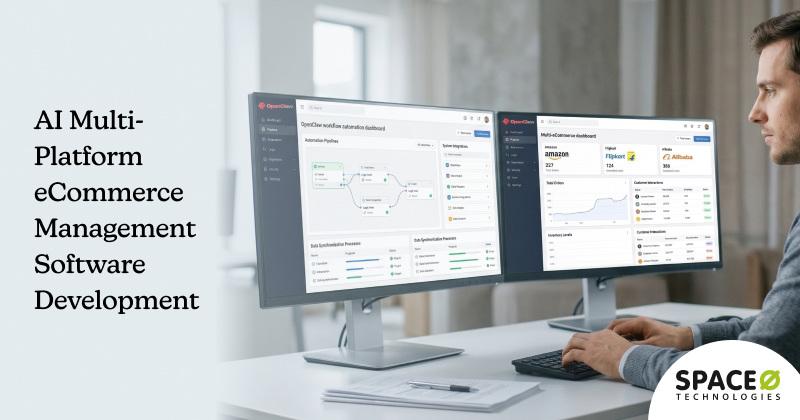
How We Developed an OpenClaw-Based Multi-Platform eCommerce Business Management Software
Learn how we developed a centralized AI eCommerce management platform that helps sellers centrally manage eCommerce across multiple marketplaces.
Client Testimonials

Project Summary
AI Development
AI System Development for Christian Church
Space-O Technologies developed a private AI system for a Christian church. The team built a system capable of uploading research information, allowing other church workers to query information in a natural way.
View All →
Project Summary
Retail
AI System Development for Gift Search Company
Space-O Technologies has developed an AI system for a gift search company. The team has built a recommendation engine, implemented dynamic pricing, and created tools for personalized marketing campaigns.
View All →
Project Summary
Nonprofit
AI System Development for Christian Church
Space-O Technologies developed a private AI system for a Christian church. The team built a system capable of uploading research information, allowing other church workers to query information in a natural way.
View All →
Project Summary
Consulting
POC Design & Dev for AI Technology Company
Space-O Technologies developed the POC of an AI product for life coaching conversations. Their work included wireframing, app design, engineering, and branding.
View All →
Project Summary
Software
Custom Mobile App Dev & Design for Software Company
Space-O Technologies was hired by a software firm to build a photo editing app that caters to restaurant owners. The team handled the development and design work, including the addition of AI-driven features.
View All →Engagement Models for Hiring AIOps Engineers

Dedicated AIOps Engineer
A full-time engineer who embeds in your team, learns your infrastructure deeply, and becomes a long-term reliability partner rather than a short-term contractor.
- Full-time commitment to your infrastructure and on-call rotation
- Deep institutional knowledge that compounds over time
- Ideal for ongoing operations, continuous monitoring improvement, and reliability roadmaps
Recommended

AIOps Staff Augmentation
Scale your existing operations team quickly with certified AIOps engineers who are ready to contribute from week one, without the overhead of full-time hiring.
- 1 to 10 engineers onboarded within 48 to 72 hours
- Pre-certified in your existing tool stack (Dynatrace, Splunk, Datadog, ServiceNow)
- Flexible engagements from one month to ongoing, with no long-term lock-in

Project-Based Engagement
A fixed-scope engagement to deliver a defined AIOps outcome, from greenfield observability platform builds to legacy monitoring stack migrations.
- Clearly defined deliverables: observability pipeline, anomaly detection model, ITSM integration
- Fixed timeline and budget with milestone-based delivery
- Ideal for platform implementations, tool migrations, or AIOps proof-of-concept projects
Why Hire AIOps Engineers from Space-O AI

Certified in Enterprise AIOps Platforms
Our engineers hold certifications and hands-on project experience across Datadog, Dynatrace, Splunk ITSI, Moogsoft, BigPanda, IBM Watson AIOps, and ServiceNow ITOM. You are not onboarding someone who will spend their first month learning your tools on your budget.

Outcome-Focused Delivery
Every engagement is tied to measurable outcomes. We track MTTR, MTTD, alert noise reduction, and incident automation rate as the primary success metrics for every AIOps engineer we place. This creates accountability that tool certifications alone cannot.

ML and AIOps Crossover Expertise
Modern AIOps is not a configuration exercise. The most impactful capabilities (adaptive anomaly detection, predictive capacity planning, intelligent event correlation) require engineers who can build and maintain ML models. Our engineers combine platform expertise with Python, TensorFlow, PyTorch, and Scikit-learn proficiency to deliver intelligent operations systems, not just configured dashboards.

Regulated Industry Experience
We have delivered AIOps implementations in healthcare (HIPAA), fintech (PCI-DSS, SOC 2), and enterprise SaaS environments with strict data governance requirements. Our engineers understand that observability pipelines handle sensitive infrastructure data and design log retention, access control, and data masking into every implementation from the start.

Full-Stack Observability Coverage
From infrastructure metrics and application traces to log pipelines and security events, our engineers cover the full MELT data spectrum across cloud-native, on-premises, and hybrid environments. You will not end up with blind spots in your observability coverage because an engineer only knows one layer of the stack.

Transparent Engagement Model
We provide weekly performance reporting tied to your MTTR and reliability targets, direct communication with your engineer (no account manager as a middleman during technical work), and engagement terms with no vendor lock-in. If a placement is not working within the first two weeks, we replace the engineer at no additional cost.
Awards and Recognitions That Validate Our AI Experience
Technology Stack Our AIOps Engineers Use
Our NLP developers are proficient across the complete modern natural language processing stack, from classical NLP libraries and annotation tools to production transformer infrastructure and monitoring.
AI & LLM Platforms
Fine-Tuning Frameworks
RAG & Retrieval
API Frameworks
CRM & ERP Systems
AI Orchestration
RPA Platforms
Cloud AI Services
Vector Databases
Development Languages
Evaluation & Observability
Deployment & DevOps
Monitoring & Security
Process to Hire AIOps Engineers in 5-Steps
Frequently Asked Questions
What does an AIOps engineer do?
An AIOps engineer builds and maintains AI-powered IT operations systems including observability pipelines, anomaly detection models, event correlation engines, automated remediation workflows, and ITSM integrations. Their primary goal is to improve infrastructure reliability by reducing mean time to detect (MTTD) and mean time to resolve (MTTR) incidents while minimizing the manual operational burden on engineering teams.
How is AIOps different from DevOps or SRE?
DevOps focuses on software delivery automation (CI/CD pipelines, infrastructure-as-code, deployment tooling). SRE applies software engineering discipline to reliability problems through error budgets, runbooks, and systematic toil reduction. AIOps applies machine learning and automation to IT operations monitoring and incident management. The three disciplines are complementary and often overlap, but each has a distinct domain focus.
Can I hire AIOps engineers on an hourly or part-time basis?
Yes. Space-O AI offers flexible engagement models including hourly staff augmentation, part-time dedicated allocations, and project-based engagements. Hourly AIOps engineering typically ranges from $30 to $90 per hour depending on seniority and the specific platform expertise required. Part-time arrangements work well for organizations that need ongoing AIOps support but do not have full-time workload for a dedicated engineer.
What certifications should I look for in an AIOps engineer?
The most valuable certification is the AIOps Foundation from the DevOps Institute, which validates vendor-neutral AIOps knowledge and practices. Beyond that, look for cloud monitoring certifications (AWS Certified DevOps Engineer, Azure DevOps Expert, GCP Professional Cloud DevOps Engineer) and platform-specific certifications such as Datadog Fundamentals, Dynatrace Professional, or Splunk Core Certified Power User. Certifications should be accompanied by quantified operational outcomes from past roles.
What tools do AIOps engineers use most?
The most commonly used AIOps tools in enterprise environments are Datadog, Dynatrace, and Splunk ITSI for platform monitoring and ML-driven alerting; Prometheus and Grafana for open-source metrics and visualization; the ELK Stack and OpenTelemetry for log management and distributed tracing; ServiceNow and PagerDuty for ITSM and incident management; and Ansible, Terraform, and Kubernetes for infrastructure automation and remediation. The specific combination depends on your cloud environment and organizational scale.
Is it better to hire an AIOps team or a single dedicated engineer?
This depends on your infrastructure complexity and operational maturity goals. A single dedicated engineer is appropriate for organizations with a focused scope: one or two monitoring platforms, a defined tool stack, and an observability maturity journey that is just beginning. A full AIOps team makes sense for large enterprises managing complex multi-cloud environments, regulated workloads across multiple compliance frameworks, or organizations targeting fully autonomous self-healing operations. A common approach is to start with one dedicated engineer to build the foundation, then scale to a team as the AIOps scope expands.